
Interview: Sally Veach
Sally Veach (b. 1962) is a Virginia-based painter whose work explores the complex relationship between nature and humanity's exploitation of its resources. Through a distinctive layered technique that interweaves historic textile patterns with expressive and romantic landscape traditions, Veach examines how humans have commodified the natural world. Her current series, human Nature, explores the historical significance of 18th-century Indian chintz textiles in global trade and colonial expansion, combining gestural layers representing pre-colonial America with structured elements from 19th-century romantic landscape traditions.
A Syracuse University BFA graduate and Torpedo Factory Art Center studio artist, Veach's work has been featured in solo exhibitions at the Museum of the Shenandoah Valley and Delaplaine Arts Center. Her art resides in the permanent collections of the Museum of the Shenandoah Valley and the City of Alexandria. Veach will present her work in an upcoming exhibition at The Athenaeum in Alexandria, VA, where viewers can experience how her multilayered paintings evoke nature's sublime power while suggesting humanity's subordinate relationship to the natural world.
Read our interview with Sally below!
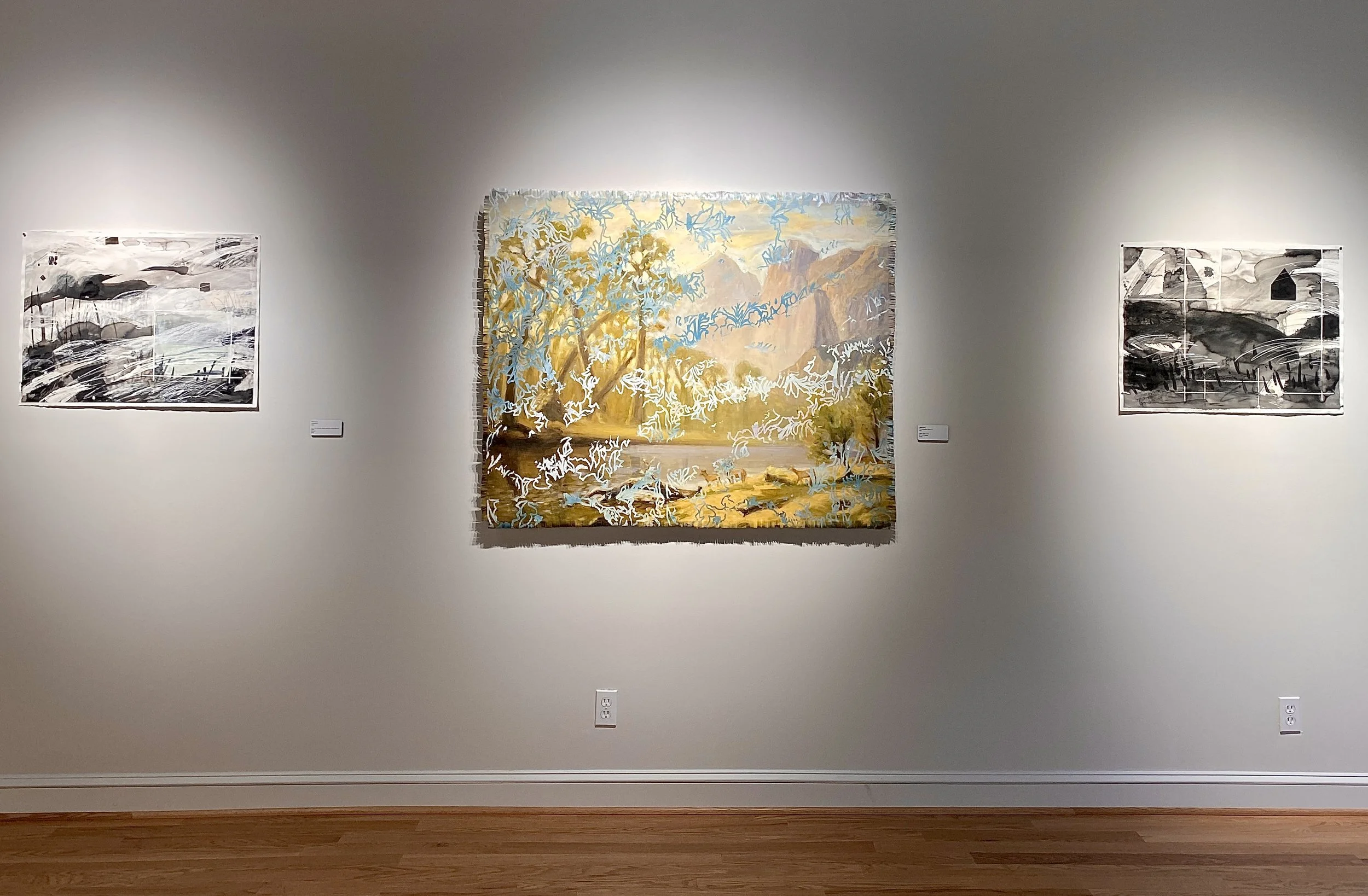
Installation view of the exhibition “Here and Where” at DC Arts Center, 2024
PP: Walk us through a typical day in your studio or generally through your process to make new work.
SV: A typical day in the studio entails a mix of conceptual research, and visualizing new work, business activities like applying to open calls, working with stencils, and finally painting. My work requires a lot of research into history and perusing museum collections of period textiles. I use photoshop to transpose textiles found in institutions, such as the Victoria & Albert Museum in London, into simplified forms so I can make stencils out of them. To make the work I first paint a gesturally expressive layer that represents pre-European contact America. From there I apply a stencil or mask of a textile design that symbolizes 18th Century colonialism. Successive layers represent advancing eras and how they have impacted the American landscape, including appropriating Hudson River School paintings to represent the manifest destiny of the Romantic 19th Century.

human Nature Mantua 2, Oil on linen mounted on wood panel, 24 × 18 inches, 2024

human Nature 17, Oil on linen mounted on panel, 33 × 23 inches, 2024
PP: What motivates you to make art?
SV: Art gives me a vehicle to communicate my ideas about the world and an outlet for emotional and physical expression. I paint with intensity which is cathartic, if not occasionally frustrating! At the same time, I am extremely interested in philosophical ideas. Creating paintings is a way to examine what makes the Universe tick, and express my thoughts on the answers.
PP: What is one goal you are aiming to achieve this year for your art practice?
SV: My goal this year is to continue to show my work at more respected venues in the DC area. I have been here for 2 1/2 years, and working on my current series for a year. I feel now is the time for exposure.
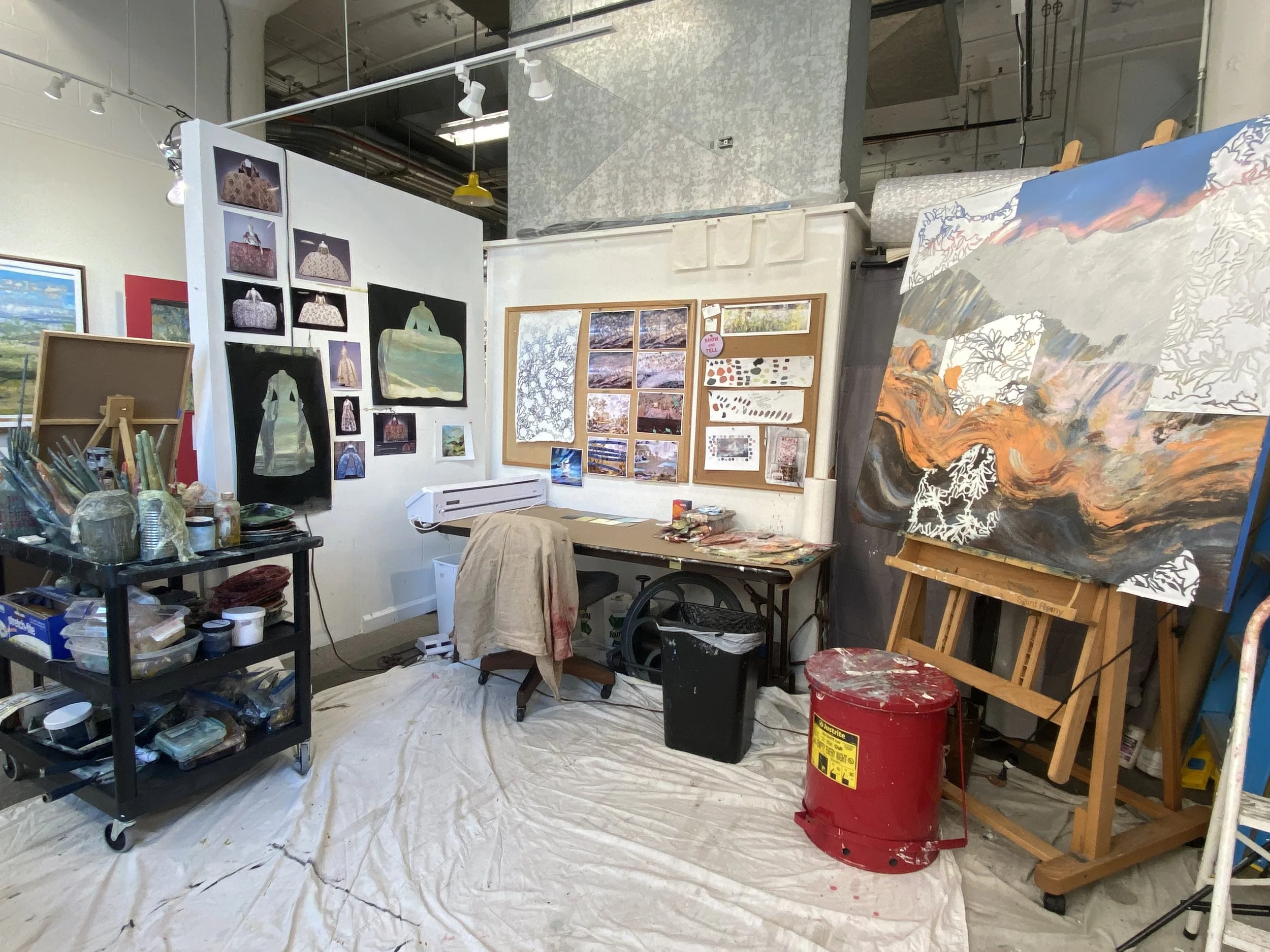
View of Sally’s studio
PP: Is community something you value in your practice? Why or why not?
SV: Yes. I highly value the artists I have gotten to know around DC. That sense of community provides comfort knowing that your interests and aspirations are shared by others. Having a peer group is invaluable for creative growth and networking opportunities.
PP: What are ways you support other artists?
SV: I try to promote other artists' shows on social media. I also will forward opportunities to artists that may be appropriate for their work. I am a always a willing partner for attending art openings. I also love lending a helpful critique or advice when asked. A rising tide floats all boats!
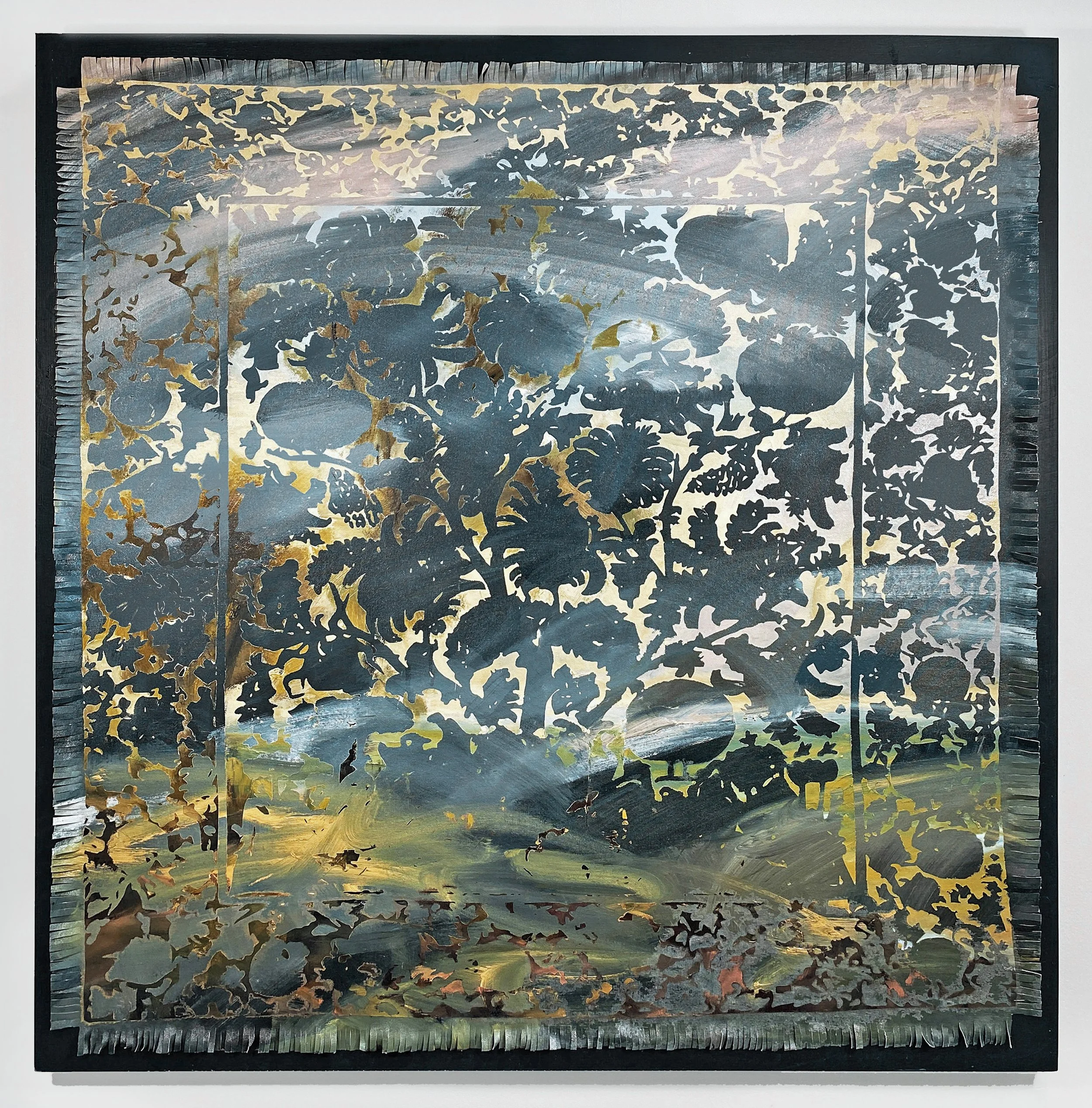
human Nature 22, Oil on canvas mounted on wood panel, 36 x 36 inches, 2024
PP: What challenges have you faced as an artist and how do you overcome them?
SV: My biggest challenge is finding that sweet spot between spontaneous intensity and planning in my work. I am interested in color, but working with color can be quite exacting. The slightest difference in hue, temperature, value, and intensity can make a huge difference in how colors interact with each other. I suppose this is because I am interested in landscape--something we are particularly attuned to as humans. I try to overcome this by coming up with systems that will work best with my easily distracted brain, and then I can let go once certain decisions are made.
To learn more about Sally’s work, see her Instagram and Website