
Charlotte Woolf (she/they) is a queer artist, educator, and curator whose work explores infrastructure, labor, and land through photography and community engagement. Their recent series, Expanding Agriculture, highlights sustainable farming and food justice through collaborations with women and LGBTQIA+ growers. Woolf holds an MFA from SUNY Purchase and a BA from Kenyon College. She has exhibited at A.I.R. Gallery, Atlanta Photography Group, the International Center of Photography, and Paradice Palase at Future Fair. Her residencies include ACRE (IL/WI), SOMA (CDMX), Wassaic Project (NY), and ChaNorth (NY), and she received a Lenscratch Student Prize Honorable Mention.
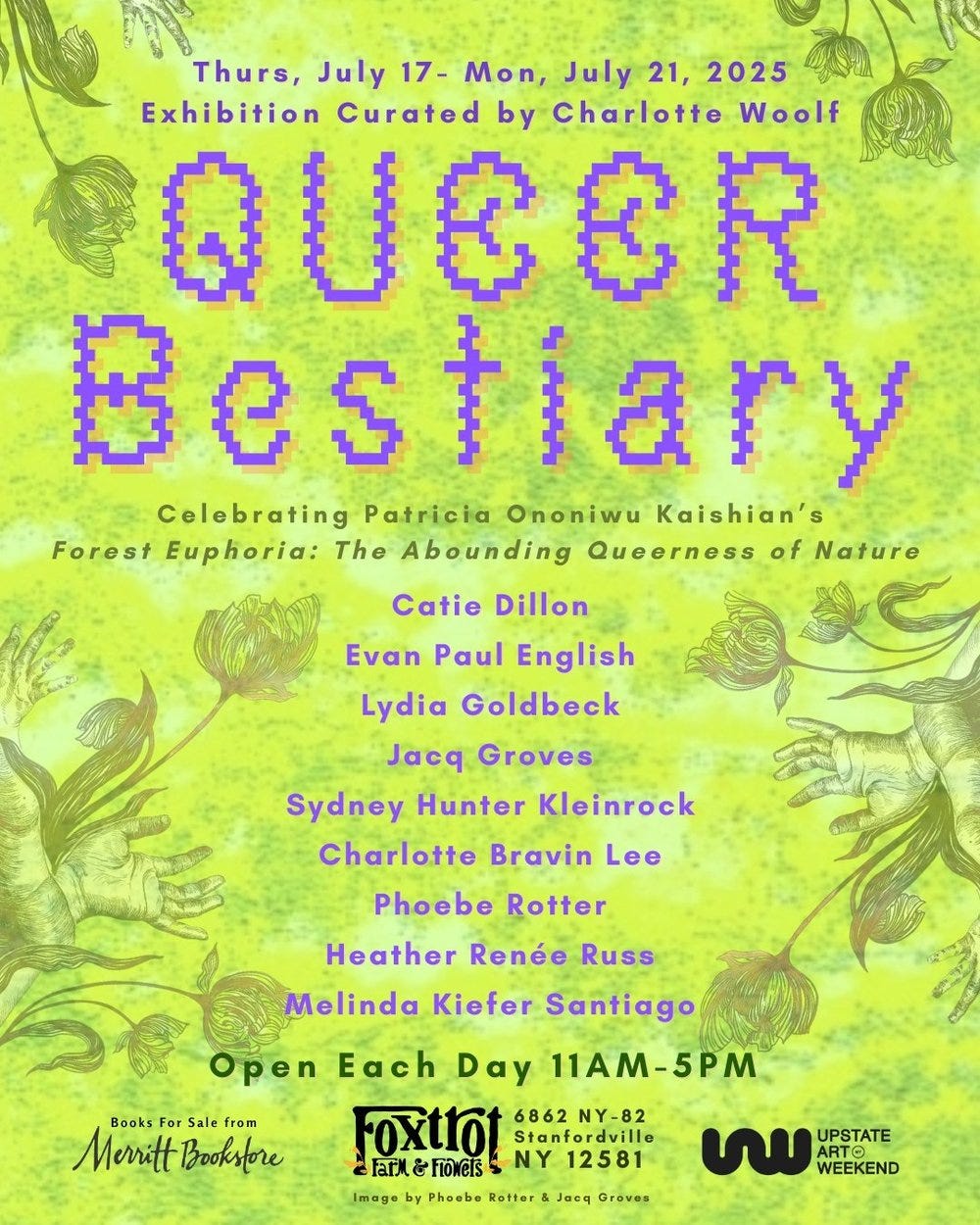
This summer, Woolf is presenting life-size banner portraits from Expanding Agriculture, a new format for the series, in the Paradice Palase Summer Sculpture Garden at ChaNorth. The installation features images of local farmers. Also this summer, she is curating Queer Bestiary at Foxtrot Farm & Flowers during Upstate Art Weekend. This marks her third annual exhibition at the farm, where she explores themes of queer ecology and community. Woolf is currently Assistant Professor of Studio Art at Georgia State University Perimeter College in Atlanta. She has two black pugs named Peach and Blueberry Cobbler.
Read our interview with Charlotte below!
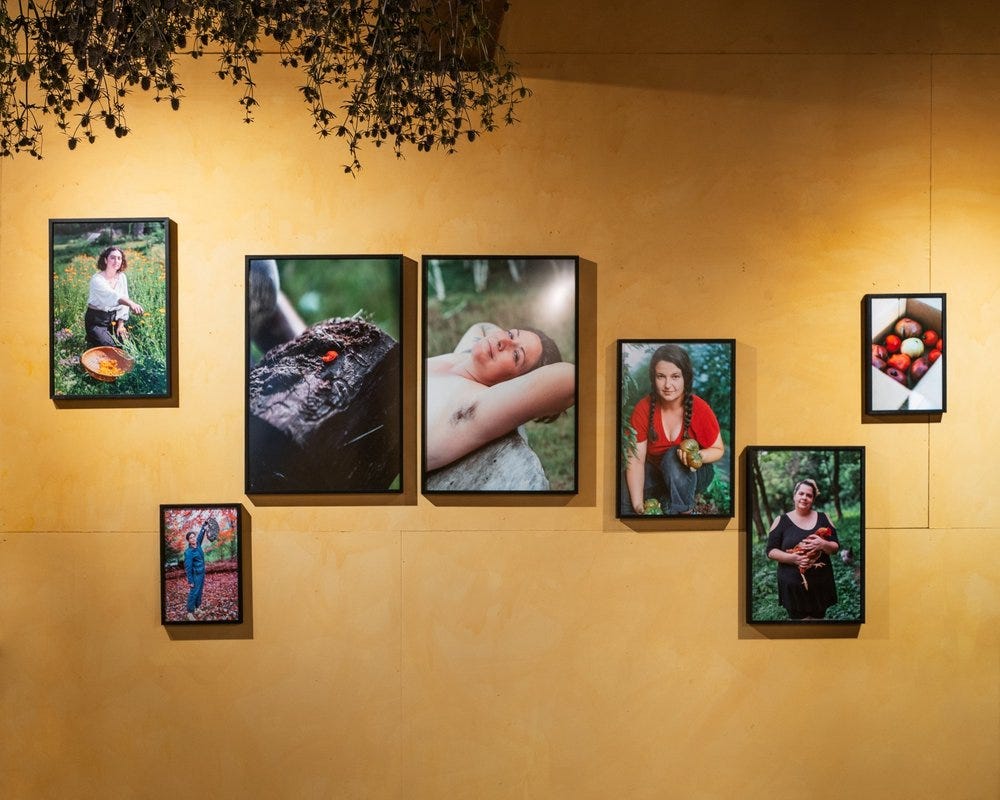
Installation view of Expanding Agriculture in the exhibition “Unruly Edges” at Foxtrot Flower Farm, July 2024
PP: Walk us through a typical day in your studio or generally through your process to make new work.
CW: I experience the world through color, light, and texture, so making photographs is a constant part of my day, whether I’m using my phone, a Polaroid 600, a mirrorless Sony, or a 35mm Canon. If you know me, chances are I’ve photographed you. For Expanding Agriculture, I often find farmers through Instagram or word of mouth, then reach out to begin building a connection before ever picking up a camera. I think of it like Charlotte’s Web, weaving threads that link people and stories.
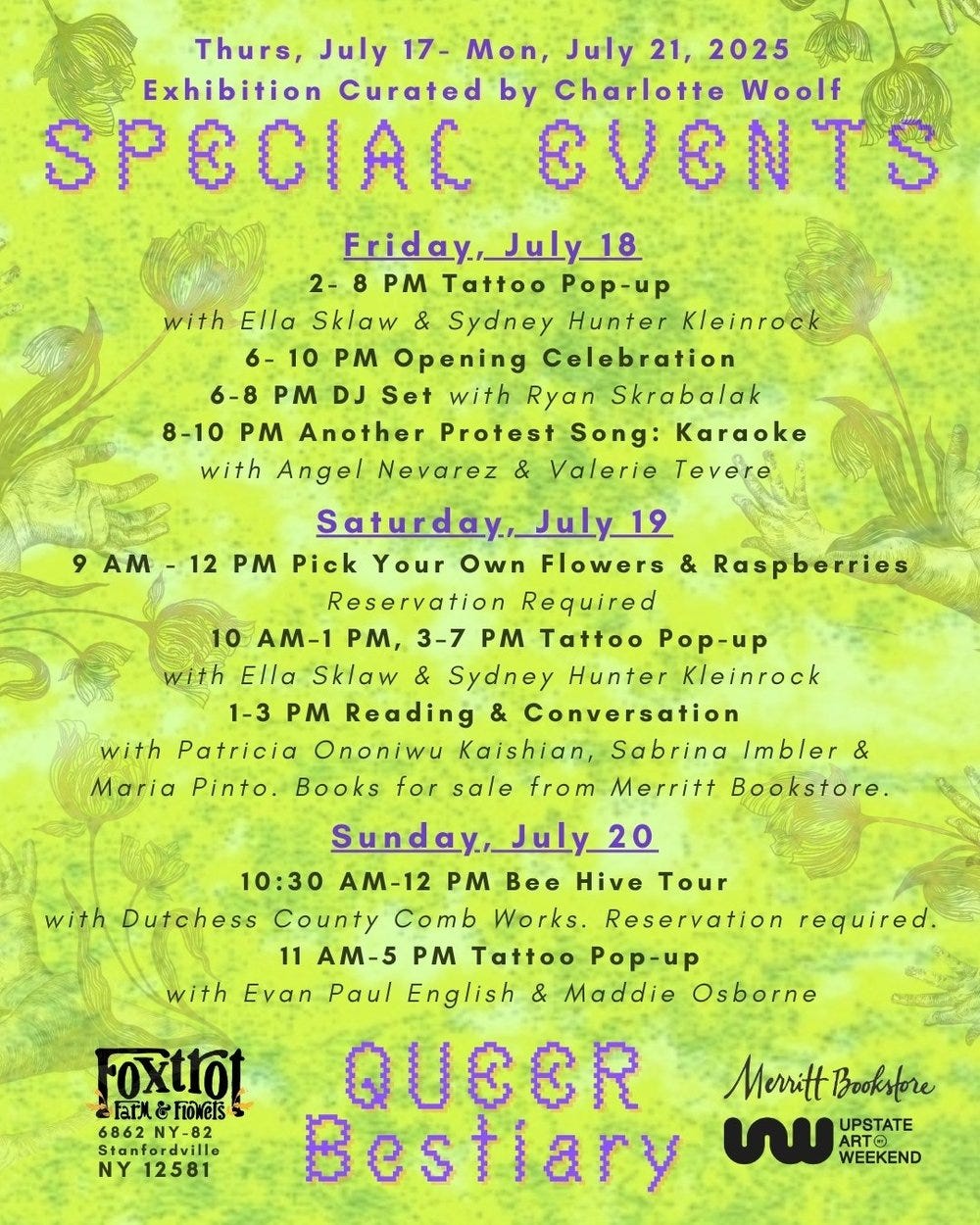
My process also includes curating and organizing events, particularly in collaboration with partners like Kate Farrar of Foxtrot Farm & Flowers. Together, we’ve created exhibitions and programs including farmer panels, book readings, and tattoo pop-ups. This summer, Dutchess County Combworks will host a beehive tour, and Kate is opening the fields for pick-your-own flowers and raspberries. Teaching feeds my practice too. Whether it’s color theory, photography, gender studies, or drawing, I’m always learning alongside my students and bringing that energy back into my work.
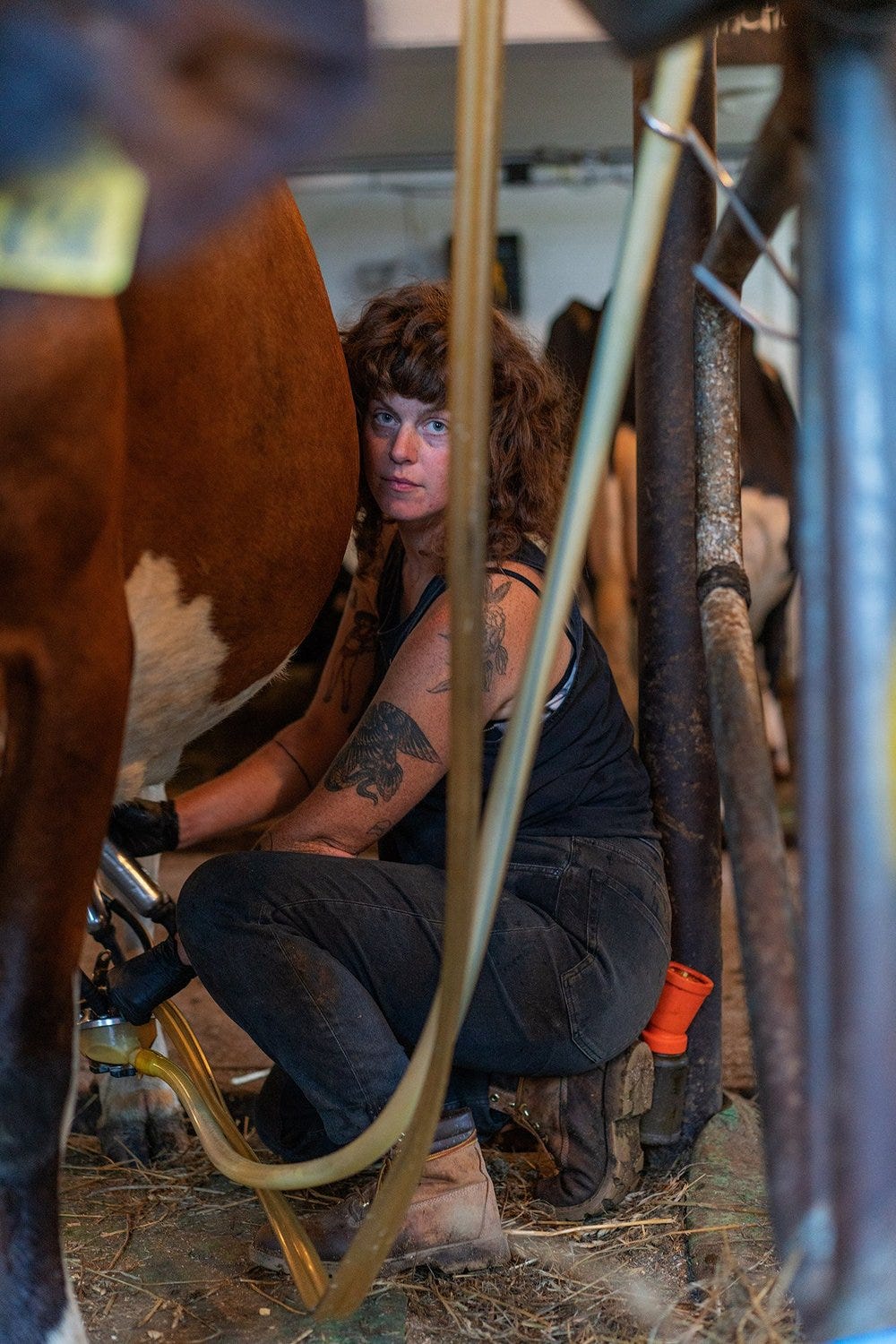
Sarah Lyons, Chaseholm Farm, Pine Plains, NY, Archival Pigment Print, Variable Sizes, 2022
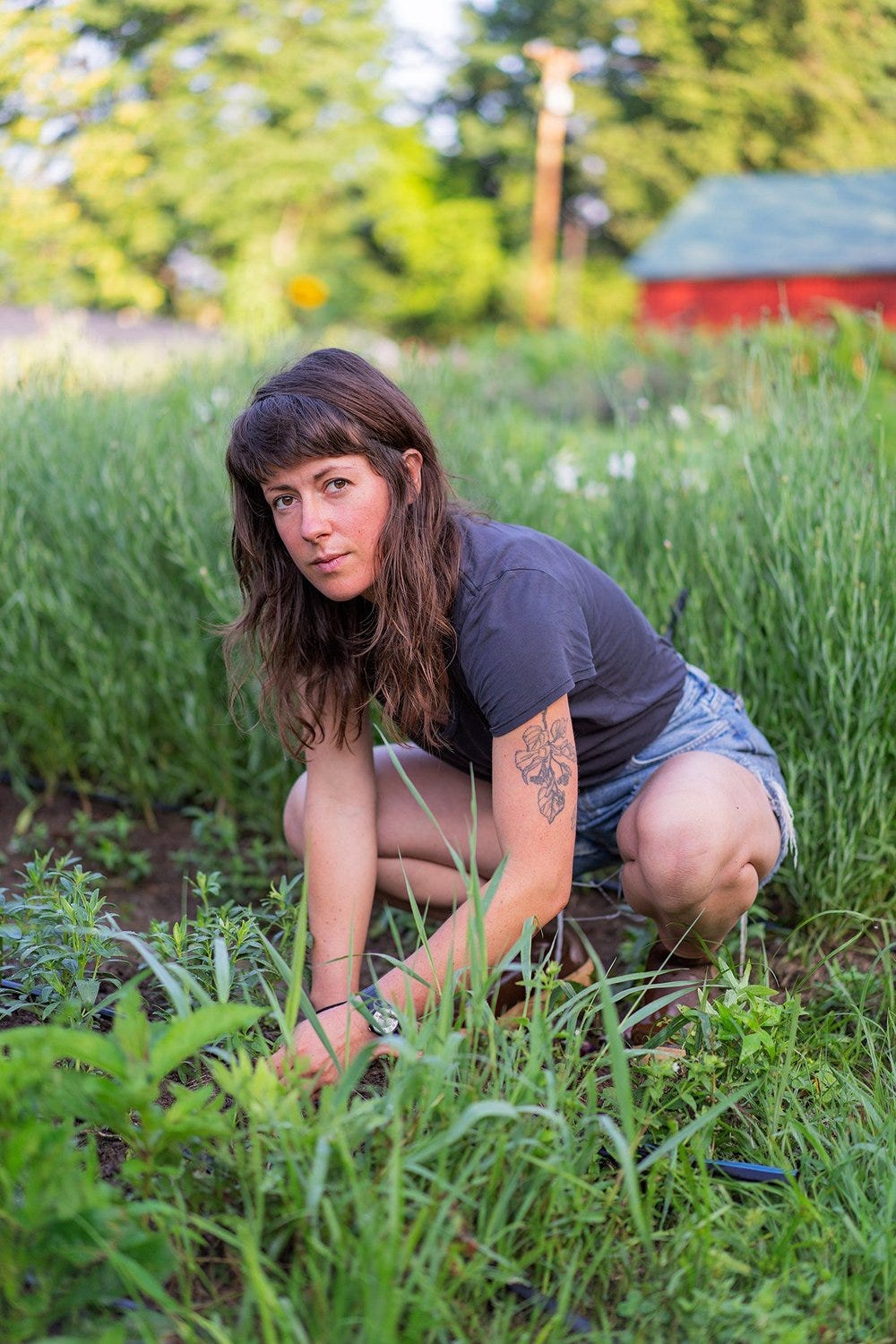
Kate Farrar, Foxtrot Farm and Flowers, Standfordville, NY, Archival Pigment Print, Variable Sizes, 2022
PP: What motivates you to make art?
CW: I’m motivated by connection to community, to land, and to the people I photograph, curate, and teach. These relationships are at the heart of everything I do. I create art to challenge fixed ideas, particularly those surrounding gender, labor, and place. Growing up queer in the conservative South gave me a deep desire to break binaries and cross boundaries, both culturally and visually. Making art allows me to create spaces where people feel seen, reflected, and part of something larger.
PP: What is one goal you are aiming to achieve this year for your art practice?
CW: I recently moved to Atlanta for my new job at Georgia State University. Now that I’ve been here for a year, I’m finally starting to feel more grounded and able to make connections locally. A big goal for me this year is to find farmers and agrarians closer to home in Georgia whom I can collaborate with and photograph as part of Expanding Agriculture. I’ve spent much of the past year getting organized and finding stability, and now I’m excited to bring more people into the work. If you live near Atlanta and are an artist or know farmers, please reach out. I’m always looking for nominations.
I’m also looking forward to photographing people I’ve connected with over the last four years working with the Foxtrot community, during my upcoming trip to New York for Upstate Art Weekend. I’ll be showing work in the Paradice Palase sculpture show and curating “Queer Bestiary” at Foxtrot Farm. I’m also hoping to find a community space here in the South where I can host similar pop-up events, so I’m putting that out there.
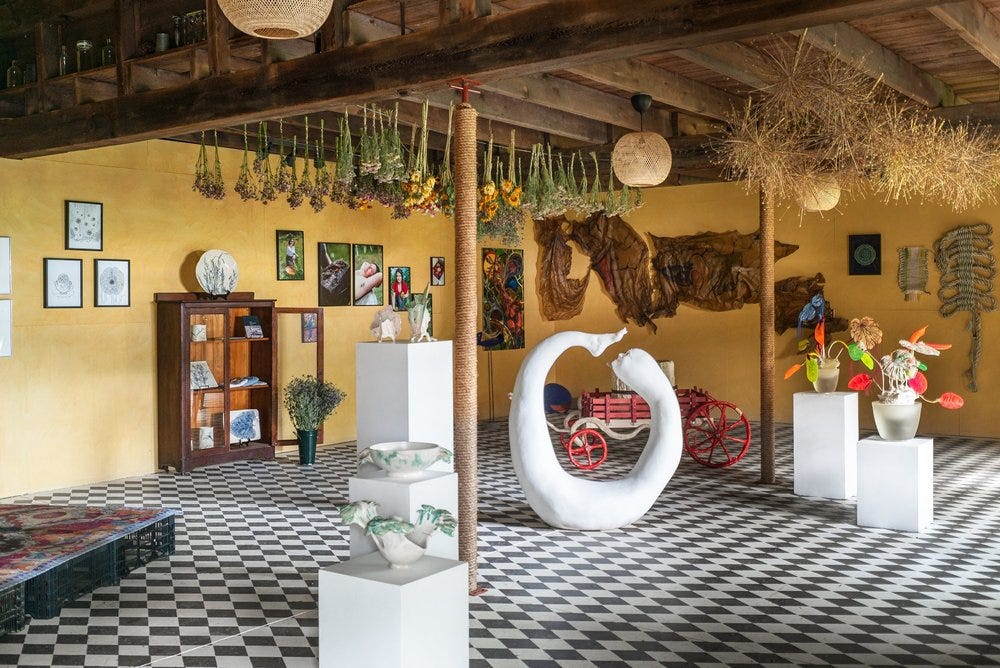
“Unruly Edges”, Group show curated by Charlotte Woolf at Foxtrot Flower Farm, July 2024
PP: Is community something you value in your practice? Why or why not?
CW: Absolutely. Community is what keeps me going, both in my art practice and in life. Some of the most meaningful collaborations I’ve had have come through a mix of happenstance and persistence. For example, this year’s “Queer Bestiary” is inspired by Forest Euphoria, a book by Patricia Ononiwu Kaishian. I met Patricia when I was teaching at Kenyon College and asked around at trivia night if anyone knew a writer in the Hudson Valley who might be interested in visiting a farm for a reading. Jen Galvão, a writer and editor at the Kenyon Review, told me that Patricia was her cousin. Patricia came to Foxtrot and did a reading during “Unruly Edges” in 2024, and now the 2025 show is centered around her work.
PP: What would a dream project look like for you as an artist?
CW: A dream project would give me the time, support, and resources to travel across rural areas in the United States and beyond, continuing to expand Expanding Agriculture. I have always dreamed of photographing farmers in Sweden, where I studied in college, or in Mexico, where I spent time in the SOMA Summer residency. I am drawn to the landscape, the light, and the ways farming and land stewardship look different across cultures. The more expansive the definition of "farmer," the better, from traditional growers to seed savers, mushroom foragers, cheese distributors, and beehive keepers.
I would spend time in each place getting to know people before photographing them, then return the portraits to their communities. I imagine temporary outdoor exhibitions in fields, farmers' markets, barns, or forests, with readings, music, tattoo pop-ups, and contributions from other artists. And if I could photograph a farmer raising something unexpected, like Gotland sheep or Highland cows, I would be in heaven.
To learn more about Charlotte’s work, see their Instagram and Website.